

Heavy Equipment, Faster Builds: The Foundation of Modern Construction
Construction schedules move with the machines behind them. From site prep to material handling and final grading, the right equipment reduces rework, improves safety, and keeps crews focused on production. Below is a research-backed guide to where heavy equipment delivers measurable gains.
Project impact snapshot
Research shows that equipment-driven productivity improvements reduce cycle times on earthmoving and material handling, leading to more predictable schedules and cost control.[1]
Smart equipment selection also supports safety outcomes by minimizing manual handling and improving site organization.[2]
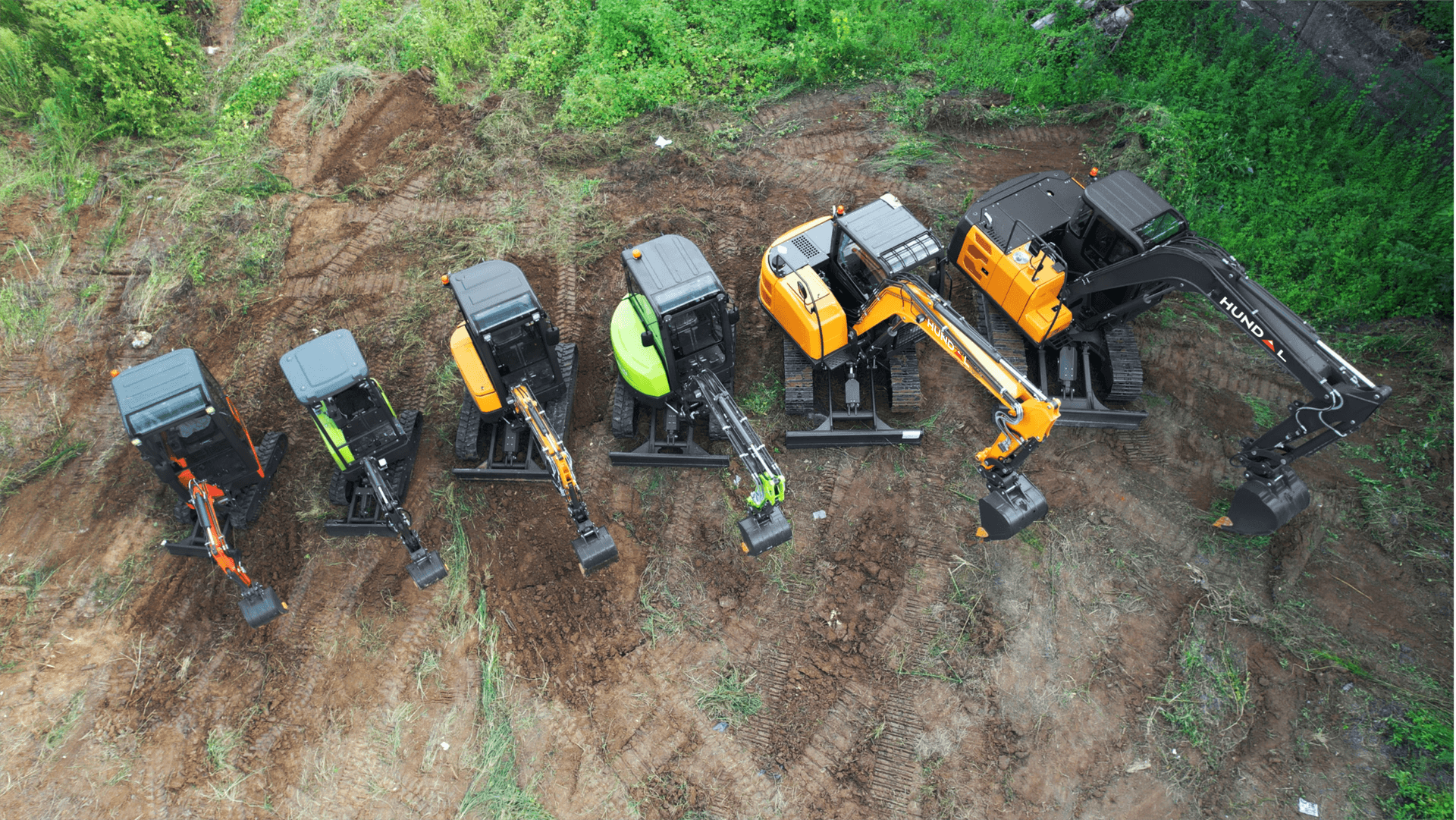
Built for reliability and certainty
Jump to section
Mechanization on the jobsite
Modern construction depends on consistent production rates. Academic studies link mechanization to improved productivity, especially in earthmoving, grading, and material handling where cycle time is critical.[1]
Research also highlights that equipment selection affects safety outcomes, reducing manual handling and exposure in high-risk tasks such as trenching and demolition.[2]
Where heavy equipment changes outcomes
Site preparation and earthworks
Grading, trenching, and excavation set the baseline for every structure. Reliable equipment keeps cut-and-fill targets accurate and reduces rework.
Material handling and logistics
Faster load-out, staging, and backfill movements reduce crew wait time and help project managers keep critical paths tight.
Utility and drainage installation
Precise trenching and bedding improve infrastructure longevity and reduce the risk of later settlement issues.
Demolition and redevelopment
Controlled demolition and material sorting accelerates turnaround, especially in urban infill or phased redevelopment projects.
Project planning support
Match the machine to the phase before work begins
Get a free equipment plan that aligns with scope, site access, and your schedule constraints.
Four machines that anchor a construction fleet
Hundal Heavy Industries builds equipment that can flex from site prep to finish work. Each machine below plays a distinct role in keeping construction projects on track.
Skid Loader
Fast, agile material handling for pallets, debris, and site cleanup. Ideal for tight job sites and fast turnarounds.
Mini Excavator
Precise trenching and grading in residential and utility work where access is limited.
Hydraulic Excavator
Heavy earthmoving, deep trenching, and demolition with the reach and breakout force needed for major civil scopes.
Compact Excavator
A stronger-engine platform for attachment-heavy work, built on the skid loader ecosystem but sized for longer duty cycles.
Why contractors choose Hundal Heavy Industries
Every construction project is a race between scope and schedule. Hundal Heavy Industries equips teams with the right machine size, attachment options, and uptime support so crews stay productive without downtime surprises.
Ready for the next build
Build a fleet that keeps your schedule on track
Let us map the right mix of loaders, excavators, and attachments for your scope, access, and budget.
Sources
- [1] Thomas, H. R., & Završki, I. (1999). Construction baseline productivity: theory and practice. Journal of Construction Engineering and Management, 125(5), 295–303.
- [2] Hallowell, M. R., & Gambatese, J. A. (2009). Construction safety risk mitigation. Journal of Construction Engineering and Management, 135(12), 1316–1323.
- [3] Schexnayder, C. J., & Mayo, R. E. (2004). Construction equipment management for cost, time, and safety. ASCE Practice Periodical on Structural Design and Construction, 9(1), 20–27.